
Choosing the right commercial lawn mowers is about more than selecting a machine with a powerful engine. Australian contractors, landscapers, councils and property-care operators need equipment that matches the property, terrain, access, workload and expected operating hours.
A mower that works well on a large open sports field may not be the best choice for a contractor maintaining smaller properties with tight access. Scag Australia offers a range of mower configurations designed to suit different applications, helping customers choose equipment that matches the size, terrain and demands of the job.The right approach is to assess the job first and then select a mower format and specifications that suit the application.
Start With the Mowing Application
Before comparing individual commercial lawn mowers, consider where and how the machine will be used. A contractor working across residential properties may need excellent manoeuvrability around trees, fences and garden beds. A council or sporting facility may prioritise productivity across larger areas. An acreage operator may require equipment capable of handling longer mowing sessions and varied conditions.
Important considerations include:
- Property size
- Terrain
- Access restrictions
- Mowing frequency
- Cutting width
- Operator comfort
- Transport requirements
- Servicing and support
Understanding these requirements first can make the mower selection process much easier.
Choose the Right Mower Format
Commercial mowing equipment is available in different configurations. Zero-turn, stand-on and walk-behind mowers each have different strengths.
Zero-Turn Mowers for Open Areas
Zero-turn mowers can be an effective choice where productivity across open areas is a priority. Their tight turning capability also allows operators to work efficiently around trees, garden beds and other obstacles. For example, SCAG’s zero-turn range includes models such as the Freedom Z, Patriot, Tiger Cat II, Cheetah II and Turf Tiger II.
The Tiger Cat II offers a compact footprint with multiple cutting-width and engine configurations, making it an option for operators who need a combination of productivity and manoeuvrability. For larger and more demanding mowing requirements, the Turf Tiger II is available with 52, 61 and 72-inch cutting widths and is built around heavy-duty components and commercial-oriented features.
Stand-On Mowers for Manoeuvrability
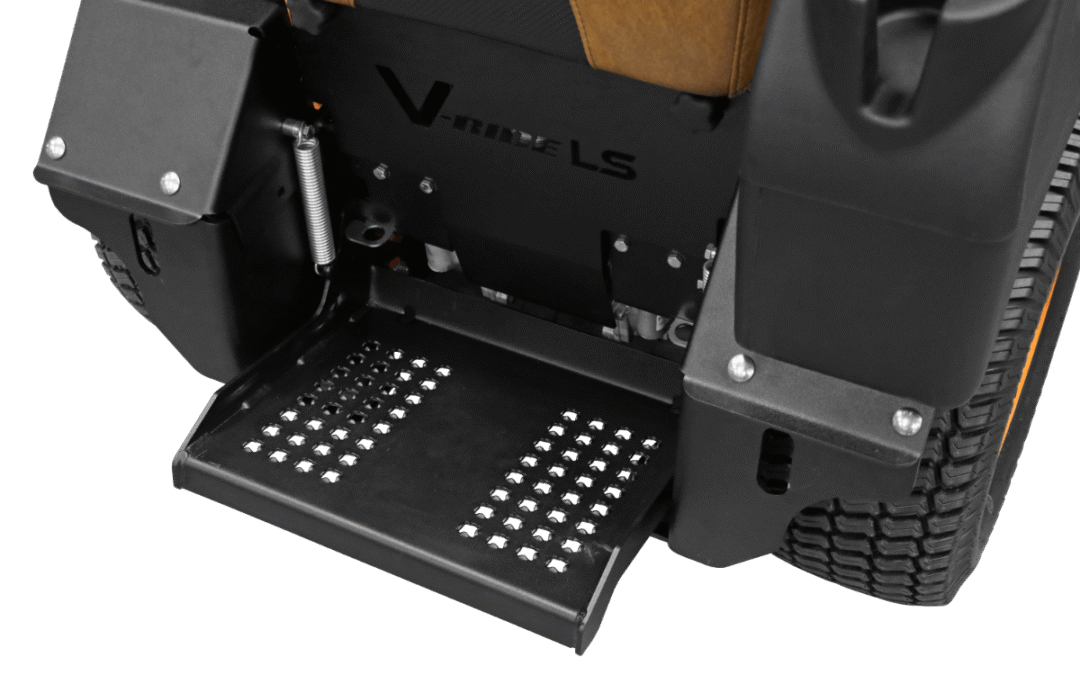
Stand-on mowers can suit contractors who need visibility, manoeuvrability and frequent mounting and dismounting throughout the working day.The SCAG V-Ride II, for example, features a suspended operator platform designed to provide a comfortable operating position during extended mowing.For contractors moving between multiple properties, the stand-on format can also provide a practical combination of compact dimensions and productivity.
Walk-Behind Mowers for Restricted Areas
Walk-behind mowers can be useful where access is restricted or a larger ride-on machine is not practical.They can provide greater control in tighter spaces, making them useful for areas where compact access and precision are more important than maximum cutting width.
Consider Cutting Width Carefully
Cutting width is an important consideration when comparing commercial lawn mowers, but a wider deck is not always the best choice.
Before selecting a wide cutting deck, consider:
- The size of the property
- Gate widths
- Narrow pathways
- Trees and other obstacles
- Transport requirements
- Storage space
- Terrain
A wider deck can improve productivity across large open areas, while a more compact mower may be easier to operate around restricted areas.The goal is to find the right balance between coverage and access.
Think About Operator Comfort
Commercial mowing can involve long operating hours, so operator comfort should be part of the selection process. Features such as suspension seating, adjustable controls and suspended operator platforms can contribute to a more comfortable operating environment. For example, selected SCAG models include suspension seats, adjustable steering controls and suspension platforms designed to help reduce operator fatigue. When equipment is used regularly, operator comfort can be an important consideration alongside productivity and cutting performance.
Look Beyond Engine Power
Engine power matters, but it should not be the only factor when comparing commercial mower options.
Consider the complete machine, including:
- Cutter-deck design
- Spindle construction
- Engine configuration
- Ground speed
- Operator controls
- Comfort features
- Maintenance requirements
- Parts availability
A mower should be evaluated as a complete piece of equipment rather than based on horsepower alone.
Which Commercial Mower Is Right for Your Business?
There is no single mower that is right for every business. A contractor maintaining residential lawns may prioritise manoeuvrability and easy transport between properties. A commercial landscaping business working across large open areas may place greater emphasis on cutting width and productivity. Councils and sporting facilities may need equipment capable of maintaining larger areas regularly, while operators working in restricted spaces may benefit from a more compact format.
A simple way to approach the decision is:
Smaller or restricted areas: Consider a walk-behind mower.
Properties requiring frequent access and manoeuvrability: Consider a stand-on mower.
Large open areas: Consider a zero-turn mower.
Heavy or extended mowing workloads: Pay close attention to deck construction, engine options, operator comfort and servicing requirements.
The final decision should be based on the actual working environment rather than simply choosing the largest or most powerful machine.
Uptime and Ownership Support
For professional operators, a mower is a working asset. Unexpected downtime can affect schedules, customers and business productivity. This makes servicing, genuine parts and dealer support important factors when selecting commercial mowing equipment. A strong support network can help operators maintain their equipment properly and address servicing requirements when they arise. When comparing commercial lawn mowers, consider not only the initial machine but also the support available throughout ownership.
Conclusion
Choosing the right commercial lawn mowers starts with understanding the work the equipment needs to perform. Property size, terrain, access, mowing frequency, cutting width and operator requirements should all influence the decision.
Zero-turn, stand-on and walk-behind mowers each have different strengths. By matching the mower format to the application and considering long-term servicing and support, Australian operators can make a more informed equipment investment.
The objective is not simply to find the biggest or most powerful mower. It is to find equipment that provides the right balance of productivity, manoeuvrability, comfort and reliability for the job. For help choosing the right mower for your requirements, contact the Scag Australia team today.
Frequently Asked Questions
1. What should I consider when choosing commercial lawn mowers?
Consider property size, terrain, access, mowing frequency, cutting width, operator comfort, transport requirements, maintenance and dealer support.
2. Are zero-turn mowers suitable for commercial mowing?
Yes, zero-turn mowers can be well suited to commercial mowing, particularly for large open areas where productivity and manoeuvrability are important.
3. Are stand-on mowers suitable for lawn-care contractors?
Stand-on mowers can be a practical option for contractors who need good manoeuvrability, visibility and convenient mounting and dismounting while working across multiple properties.
4. What cutting width should I choose for a commercial mower?
The ideal cutting width depends on the property and access conditions. Wider decks can increase productivity in open areas, while narrower machines can be easier to operate around obstacles and restricted access.
5. Why is dealer support important for commercial mower owners?
Regular servicing, technical support and access to genuine parts can help keep equipment operating efficiently and reduce avoidable downtime.